Wednesday, 23 December 2020

My Writing Year 2020

As has become annual I thought I'd write a quick blog post as to my literary achievements during 2020.

It goes without saying - but here I find myself saying it anyway - that 2020 has been rather an odd year. However, whilst I've barely written any fiction at all in the last twelve months, that isn't due to circumstances created by Covid-19. Towards the end of last year I found myself getting increasingly disillusioned with fiction, and had already begun a non-fiction work which has taken up most of 2020. Additionally, I've had an absolute ton of freelance proofreading, copyediting and critiquing to do, in addition to the day job (which has remained constant through the various lockdowns). So whilst Covid-19 has created an environment within which I'm a little unsure how to write my way through it, the virus itself hasn't been a deciding factor in my work.

Usually I aim to write a short story a month, but that went totally out of the window. In fact, I've only worked on two pieces. I revamped an older story titled "Where Do Broken Dreams Go?" which I felt deserved a second look, and I added a few hundred words to the ending. I also collaborated with Eugen Bacon - a writer whose work I've discovered this year and whose poetic language has inspired me - on a short story titled "Messier 94".

What I have been writing is a non-fiction book of around 75,000 words which is currently being read by a prospective publisher. I don't want to give too many details away, but I've spent the year interviewing various actors and members of the film industry. In that respect, lockdown has been a massive benefit, because these individuals who would otherwise been working have happily answered my questions and had time for me. Hopefully, I'll be able to report more about this in 2021.

I sold three short stories this year: "The Girl With The Horizontal Walk" was selected as a reprint for Best British Short Stories 2020 (Salt Publishing) by editor Nicholas Royle, "Fetch" to Sein und Werden, and "The Ice-Cream Blonde" to Crimewave magazine.

The following four stories were published this year: "Dirty Snow" online at The Crime Readers Association website where it can still be read in full, "My Somnambulant Heart" in Terror Tales of the Home Counties, "Fetch" in Sein und Werden (read online in full here too) and the aforementioned "The Girl With The Horizontal Walk" in Best British Short Stories 2020 through Salt Publishing. This year also saw me occasionally reviewing books for Black Static magazine.

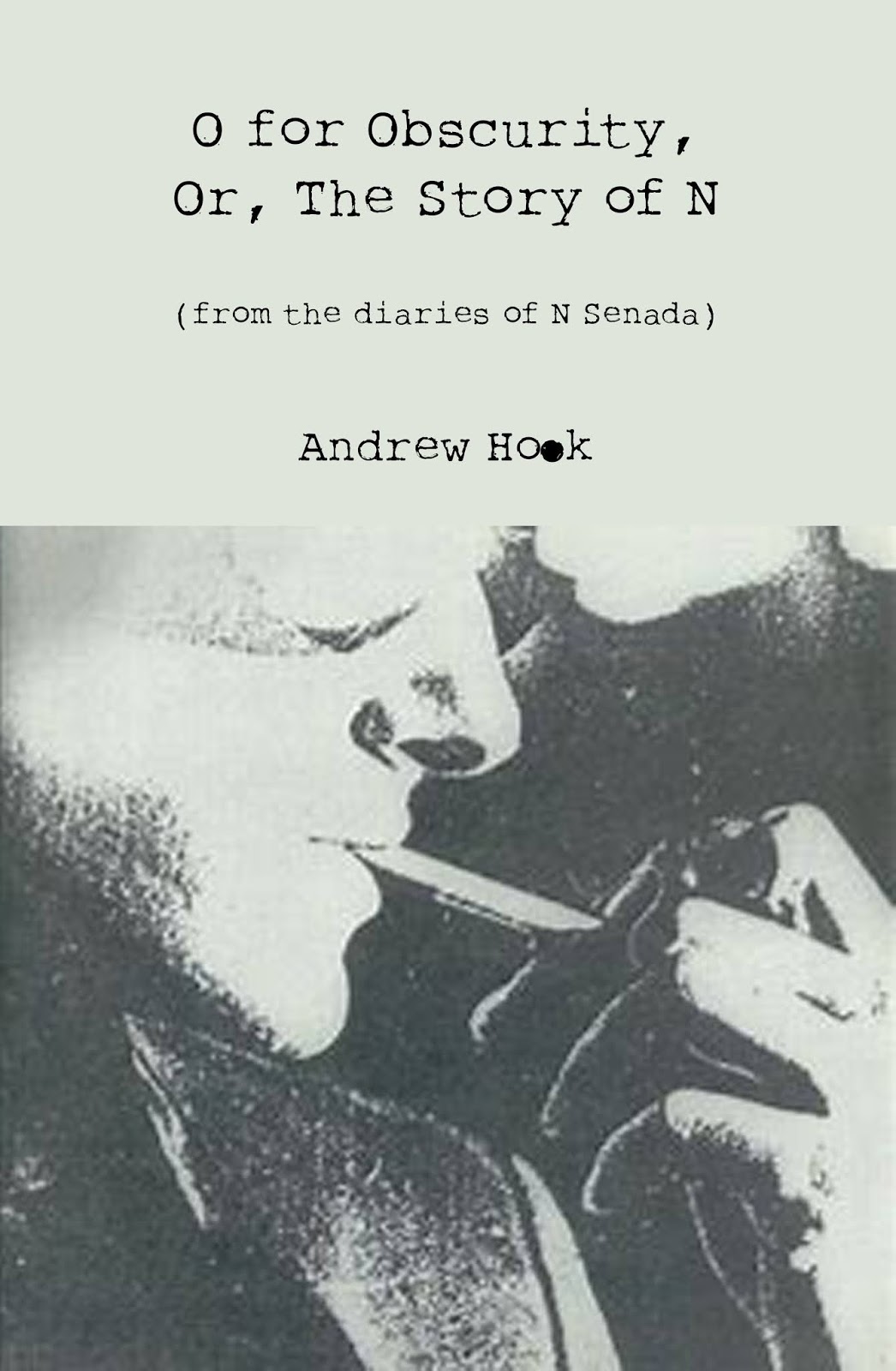
In addition to the short stories, I had two books published in 2020. My biography of The Mysterious N Senada, which I wrote after decoding the Bavarian composer's diaries, titled "O For Obscurity, Or, The Story Of N", was published by the Eyeball Museum in association with Psychofon Records with a version coupled with The Residents' recording of Senada's "Pollex Christi" magnum opus, and my eighth short story collection, "Frequencies of Existence" was published through NewCon Press.

I have a handful of stories awaiting publication that were originally accepted in previous years, and a few novels are also under consideration by various agents/publishers, as they were last year. 

So that's it for 2020, a year most of us will be glad to see the back of!

Monday, 2 November 2020

Best British Short Stories 2020

My short story, "The Girl With The Horizontal Walk", has just been reprinted in Best British Short Stories 2020 edited by Nicholas Royle, published by Salt. In view of that, I'm reprising this post from last year when the story was originally published as a standalone chapbook by Salò Press, and as usual I'm blogging a few notes about how the piece came to be written. There will probably be spoilers for those yet to read it.


The subject matter of "The Girl With The Horizontal Walk" is Marilyn Monroe. I previously had no more than a cursory interest in the actress until I read a fictionalised biography of her work titled "Blonde" by Joyce Carol Oates. "Blonde" is an absolute tour-de-force, a brilliant piece of writing reimagining Monroe's life, which is heart-breaking, exhilarating and an absolute page turner (for all of it's 600 pages). After reading the book a few years ago I felt compelled to write my own Monroe story. But where was I to start?

After doing some research I became intrigued at the premise of her last - unfinished - movie: "Something's Got To Give". In the film Monroe's character (Ellen Arden) is a photographer declared legally dead after being lost at sea in the Pacific. Her husband remarries. Monroe then returns after being rescued and takes an assumed name, Ingrid Tic, moving in with her husband - who recognises her, of course - but concealing her real identity from the new wife. Complications ensue.

In my story, a dead Monroe attempts to process her life through the character of Ellen Arden who is an actress working on a film about a photographer named Marilyn Monroe who goes missing after an altercation with President Kennedy. Arden increasingly identifies with Monroe, in a role which itself is threatened by a make-up girl, Baker, Arden's dead ringer who the producers encourage to work as a stand-in on some of Arden's scenes. Complications ensue.


As per the original blurb: "As Marilyn Monroe's body lies in the morgue, fragments of her unfinished final movie coalesce in a swansong of remnants, gossip, memories, doppelgangers and subterfuge."

"I play a photographer, Marilyn Monroe. I get to go platinum. Preferably a wig. Marilyn doesn't take great pictures, but she's always in the right place at the right time. Plus she's pretty - we know how many doors that opens, front and back. She carves out a career for herself, LifeMovielandModern Screen, all those covers. She gets invited to all the right parties, then some of the wrong ones. So there's then a photo of the president; in flagrante. Before you know it, she's killed."


The symbol on the original cover, incidentally, is the chemical compound for the barbiturates which were found in Monroe's body by the coroner after her death. The chapbook itself is still for sale over at Salò Press and can be purchased in that edition  here.

Writing "The Girl With The Horizontal Walk" has led me to create several pieces of fiction under similar premises - which I affectionately call my 'celebrity death' stories - whereby character's attempts to understand their deaths are subverted by confused memories of their life. These now form a collection, "Candescent Blooms", currently seeking a publisher. I've blogged about two of the stories which have also been published at the following links: Grace Kelly and Olive Thomas.

"Best British Short Stories" includes stories by the following: Richard Lawrence Bennett, Luke Brown, David Constantine, Tim Etchells, Nicola Freeman, Amanthi Harris, Andrew Hook, Sonia Hope, Hanif Kureishi, Helen Mort, Jeff Noon, Irenosen Okojie, KJ Orr, Bridget Penney, Diana Powell, David Rose, Sarah Schofield, Adrian Slatcher, NJ Stallard, Robert Stone, Stephen Thompson and Zakia Uddin. It's a 272pp paperback for £9.99 and can be purchased here.

Friday, 23 October 2020

My Somnambulant Heart

My short story titled "My Somnambulant Heart" has just been published in the anthology Terror Tales of the Home Counties, edited by Paul Finch, and as usual I'm writing a few words discussing how the story came to be written. There may be spoilers within.

First of all, the Terror Tales anthologies are a long-running series which focus on horror stories set within particular locations (in fact, this is the thirteenth anthology in the series). I was approached by Paul Finch a while back as to whether I would like to contribute to this book, and immediately said yes. Stories based on locations are always interesting, because material can be drawn from the physical place to augment the characters in a story. In this case I chose Box Hill in Surrey, which has the oldest untouched area of natural woodland in the UK, one of the oldest in Europe in fact. The hill takes it's name from the ancient Box Woodland that can be found on the steepest West-facing chalk-face slope. Local history has it that witches once used to congregate in their covens on Box Hill, because they believed the Box Trees enabled them to better interact with the spirit world. It's also the location where the eccentric Major Peter Labelliere was buried upside down in his grave at Box Hill (through choice).

My story concerns a Londoner moving to Surrey. An unfeeling, mildly unpleasant character who has been unable to engage with other people during the course of his life, and who has glossed over in his mind the bullying he took part in of another boy at school. The boy who is a man who is now living in Surrey, and who brings some home truths to bear.

The story was inspired by my own schoolboy recollections of how someone was treated badly by others at my school. Whilst I was only at the peripheries of that - and hindsight/context makes a world of difference - I've never forgotten it. I can't remember where the title came from, but I had it for some time. I imagined it has resonated much deeper with the boy who was bullied. That simmering resentment, together with the legends around Box Hill, are what inspired the story.


Here's an extract: On the side of the Old Fort some vegetation made a face. It struck me that pareidolia wasn’t restricted to finding order where there was none, but it also collated a series of random events into something that might be perceived as significant. Hindsight made it easy to fictionalise reality, to find signs and connections which don’t actually exist. Yet underlying my dissatisfaction was the knowledge that Harris had somehow managed to step outside of the persona we had granted him. However it had happened, Harris was somehow more successful at being a person than I was.

Paul discusses the theme of the anthology in more detail here.


Terror Tales From The Home Counties is published by Telos and retails at £12.99 in paperback with an e-book version also available. Contributors include Steve Duffy, Reggie Oliver, Gail-Nina Anderson, Sam Dawson, Andrew Hook, Steven J Dines, Tina Rath, Paul Finch, John Llewellyn Probert, Helen Grant, Mick Sims, Tom Johnstone, Allen Ashley, David J Howe and Jason Gould. Buy your copy here

Tuesday, 13 October 2020

Frequencies of Existence

My seventh short story collection, Frequencies of Existence, is published today through NewCon Press, so I thought a short blog post to celebrate this was in order. The collection contains twenty-four stories, four of which are original to this book. The other stories have been previously published in magazines and anthologies such as Black Static, PostScripts, and Strange Tales amongst other places. As usual for me, there are a mix of styles, which might include elements of SF/F/H but perhaps are most appropriately described as slipstream. So general weird speculative fiction with a focus on the interplay of relationships set against unreal scenarios. Here's the cover:


To give a flavour of what's on offer, I'm going to quote from a handful of my favourite stories in the book and explain why they resonate with me.

First up is "Your Golden Hands", originally published in PostScripts. This is a conquistador-type story, albeit set on an alien planet. The human fixation with gold remains, but where exactly is it?

We were of the understanding that you didn’t really know what we were looking for. Tradition told us that material things held no meaning for you. Metals, gems, other natural resources were not there to be exploited, just to be used as and when you saw fit. Like a hermit camped in a battered tent in the desert with an unknown oil well hundreds of feet beneath him, you had no urge to seek what you didn’t know was there. Still, we kept the nature of our quest secret.

- - -

Another favourite is "The Last Mohican" which is my punk story. Punk was a huge influence with me as an individual and has accordingly affected many of the decisions I have made in life. This story has an alternative reality where 1976 was a turning point in British politics and the ethos of punk was accepted and still continues to the present day. But what happens when you're the last punk standing from that era?

Everyone says they remember where they were when Thatcher’s government came down. Of course, we were all post-punk then, but the ragged sentiments from the three-chord thrust were still running through our veins. And by that time we had the whole country behind us. Whoever said the revolution starts at closing time had been right. We had a black and white TV in those days, but I swear you could see the orange flames flickering at the Houses of Parliament.

- - -

My favourite out of the new stories is "Always Forever Today" where a film critic ruminates over an article he has to write about his most influential film, which in his case is Roman Polanski's feature debut, "Knife In The Water". The idea for this story came about through watching an older black and white film and realising that not only all the actors were now deceased, but also all of the original audience for the movie would also have died. There's a train of thought that suggests immortality is achieved through film, but of course that isn't the case. And what if film itself might also decay?

Donald had never been a fiction writer, although some of his critics – even a critic can have critics – considered him otherwise. Nevertheless as he climbed the stairs to bed he remembered a story idea he once had. That instead of movie stars adhering to the immortality of their screen presences, on each viewing they would age incrementally, until finally they would continue beyond the point of their deaths, trapped within the movie’s cycle, their remaining flesh performing their roles, until everything rotted away and returned to dust and only disembodied voices could be heard.

- - -

Finally, a favourite with many readers who have expressed an interest in my work is "The Day My Heart Stood Still". This features an extraordinarily simple premise: what if death has been eradicated so that generations have passed and no one can remember it. And then what happens should someone die? I consider this piece to be Ray Bradburyesque in the telling. Here's a bit of it:

I sat beside her for a few minutes before glancing at the clock. Dad would be home soon and would know what to do. On a whim I reached out and peeled her left eyelid over the cornea. The returned stare was vacant but again she didn’t wake. I was getting bored. I stood and wandered to the doorway. I was also getting hungry. The eye regarded me impassively. I turned off the light but the eye was still visible, so I nipped back and pulled the lid down again before returning to Charlotte and the pool.

- - -

So that's a very brief taster of what's in the book. I think it's quite eclectic and brimming with ideas, but then I would say that. So here's what others have said:

“For lovers of metafiction, poetic text, intellectual narrative and elusive characters who linger to haunt you. The thrill you get reading Andrew Hook’s weird collection is out of this world. It’s a pastiche of the literary strange. You’ll want to read more of Hook after this.” – Aurealis, review by Eugen Bacon

“Andrew Hook is an undisputed superstar of strange fiction” – Neil Williamson, author of The Moon King

“A rich slab of Andrew Hook’s trademark understated darkness: measured, careful, but ruthless in its own quiet way.” – Chris Beckett, Arthur C. Clarke and Edge Hill Prize-winning author.

The book is available as a limited edition signed lettered hardback and a regular paperback. Pop along to NewCon Press for your copy today!

Wednesday, 9 September 2020

The Residents

As readers of this blog will be aware, my most recent publication is a biography of The Mysterious N Senada, a Bavarian musician whose Theory of Obscurity greatly influenced the American art collective known as The Residents. "O For Obscurity, Or, The Story Of N" is available as a limited edition paperback through Psychofon Records and also had been coupled with The Resident's recording of Senada's "Pollex Christi", although I believe that version has now sold out. Anyway, despite The Residents being the biggest avant garde band in history with over 60 albums since the early 1970s it still surprises me as to how few people seem to have heard of them. Here then, is a guide to some of my favourite pieces. It tends to be the more accessible material, so - believe me - there is a lot of stuff they've done which is weirder than this - but here are my 'go to' favourites for some Residential listening. Enjoy! Where possible I've linked to videos - the band have been pioneers for the format - but also some live performances that I love.

1. Guylum Bardot is contained within the opening segment of their debut album, "Meet The Residents", from 1974. A suitably weird piece with a musicality that I love.
    

2. Another favourite album is the delightfully named "Fingerprince". Here is the opening track, the infectious "You Yesyesyes".
   

3. My favourite Residents album is "Not Available". A concept album in several suites, I've chosen the opener "Part One: Edweena" as it makes sense to start at the beginning. What a fabulously evocative piece of music.
 

4. "Duck Stab" is often cited as a favourite album amongst fans. I could have chosen "Hello Skinny" but "Constantinople" just about beats it. And I love this fairly recent live performance. What a costume! 


5. If all this is getting heavy, here's a one minute song from "The Commercial Album". I once recited the lyrics in full to actor Reece Shearsmith after a reading he gave for a snail story he had written. Here's why with "Moisture".
   

6. "Mark Of The Mole" was another 'story' album, this time a story of moles under attack from humans. An excellent excerpt is "Migration".
   

7. "The Tunes Of Two Cities", the second album in the mole trilogy, compares the music of the Moles and the Chubbs. I love this jaunty piece, which I would select as my entry music if I ever took up professional wrestling.
 

8. I'm fast-forwarding a bit to the "Demons Dance Alone" album written in response to the 9/11 terrorist attacks. I love this album so much I'm including three songs here. The first is a live performance of "Life Would Be Wonderful", with the normal lyrics changed to reflect the band's circumstances. I would have loved to have been at the shows for this album, because the pieces viewable online are truly magical. This version also includes a laconic James Brown anecdote.
 

9. "Honey Bear" from the same album showcases The Singing Resident's gravelly melancholy voice which makes me melt.
 

10. Finally from "Demons Dance Alone" who wouldn't like a song called "Make Me Moo"? There's often a childlike feel to The Resident's music (note: not childish) and this song perfectly exemplifies that.
 

11. Only The Residents would record a song about the Dutch tulip crisis! "Two Lips" might have double meanings of course. This is from the "Animal Lover" album.
 

12. A beautiful piece of music and a wonderful video for "My Window" (also from "Animal Lover")
 

13. Moving to more recent material, here's the catchy "Voodoo Doll" from the "Intruders" album:
 

14. And then we are bang up to date with a couple of tracks from 2020's "Metal, Meat and Bone": the re-imagining of lost demos from the forgotten blues singer, Dyin' Dog. First up is the (not safe for work) video for the incredibly catchy "Bury My Bone", with The Singing Resident channeling Ken Dodd, surely?
 

15. And finally another moving vocal in "Mama Don't Go".
 

Of course, there are loads I haven't mentioned and this selection just scratches the surface. There are far more experimental pieces in their oeuvre than this, but hopefully it provides a good introduction. Special shout out should go to the "Eskimo" album but because it is best heard as one piece I haven't made a selection from it. Feel free to add your favourites in the comments box below.

If you've enjoyed these, I suggest you follow Ralph's Records' motto: Buy Or Die!

Sunday, 23 August 2020

O For Obscurity, Or, The Story Of N

My next book, "O For Obscurity, Or, The Story Of N", has just been announced for pre-sale over at Psychofon Records. Publication sees the culmination of a long journey for this title, which began when I discovered an encrypted diary page written by The Mysterious N Senada when I was at a London television studio researching my novella, "Ponthe Oldenguine", back in 2009, and then subsequently the discovery of the full diary by the San Francisco avant-garde collective known as The Residents whilst they were uncovering material for their pREServed CD retrospective issued through Cherry Red Records. The code in which the diary is written took a while to fathom, until I recognised it employed many of the tricks used by Numbers Stations, but the less said about conspiracy theories the better.


For those unfamiliar, N Senada was a Bavarian musician whose work influenced the early music of The Residents. Working from the encrypted diaries, I've managed to piece together Senada’s life from its beginnings in the Bavarian forest to his death in a nondescript hotel room. Focusing on the creative development of his magnum opus, "Pollex Christi", whilst also illuminating the inspiration behind The Residents' “Eskimo” album, the resulting work is a unique insight into the mind of the man and his Theories of Obscurity and Phonetic Organisation.


The small leather notebook, wrapped in sealskin and rawhide, with the letter "N" embossed upon its cover, is a major musical artefact, for which I am privileged to bring to life through my interpretation of its contents. My thanks to Homer Flynn of the Cryptic Corporation for his positive involvement in the project and for The Residents for allowing me to work with this material. Special thanks also for Andreas at Psychofon Records for agreeing to pair the book with a limited edition run of "Pollex Christi" as performed by The Residents in a package which is as beautiful as it is intriguing.


I might never have begun this book if I hadn't already been aware of The Residents, and therefore realised the significance of the extract I had unearthed. And if it wasn't for the following NME feature which intrigued me at the tender age of fourteen I might never have discovered them in the first place.


The sleeve notes referencing Senada both in "Eskimo" and "Not Available" drew me to this elusive character and I felt a spiritual connection which has been compounded whilst translating these diaries and writing this book. To be associated with Senada and The Residents is something my fourteen-year-old self would never have imagined. I thank providence for pointing them my way.


Myself with Homer Flynn of The Cryptic Corporation and the spokesperson for The Residents, London, January 2019


All pre-order information regarding the two different versions of the book/record packaging can be found on the Psychofon Records website, together with a promotional video where I expand on the discovery of the diary page and working on the subsequent translation. Within five hours of the pre-sale, the special edition is almost sold out, so be quick if you want to grab one!

Meanwhile, here's some pre-press reviews:

Upon reading the brief journal, one of The Residents recounted the feeling of having rediscovered – and lost – one of his best friends, as the others nodded approvingly – The Cryptic Corporation

Hook’s writing is, of course, sublime, and his portrayal of the mercurial German is both entertaining and surreal. And like Senada, Hook seeks to produce pure art, free from interpolation or distraction, while still being accessible. He (somehow) achieves it. Pure art and a real statement of intent – Chris Kelso, author of The Dissolving Zinc Theater.

Impeccable, especially in the dissection of the spiralling thought processes of the protagonist. A fine piece of work – Andrew Humphrey, author of Alison.

Tuesday, 5 May 2020

Dave Greenfield: 1949 - 2020

It's not often that four disparate individuals form a band and each holds equal importance to the other. The Stranglers were such a band.

In January 1978 I was ten and a half years old. I had been a punk for some time without really knowing what punk was. I was at the nebulous age where reality was only just starting to coalesce around me and my world view was naive and malformed. Initially it wasn't even clear to me that punk was about music, but I knew it was political because a few of us at school had plans to sneak up behind Margaret Thatcher and pull down her underwear. But that must have been 1979, so memory is challenging me now. What I do know is that one day at school my mate, Mark Dullea (who sadly passed away earlier this year), said: "If you're calling yourself a punk then you need to buy a punk record." That weekend I did.

I went with my mum to the Jarrold's department store in Norwich where she asked the salesgirl if she had five minutes and received a puzzled look, whilst I saw the cover of The Stranglers' "5 Minutes" single beneath the glass counter. The lettering was LED red on a black background. I still go giddy even thinking about it. It would be the first 'proper' record I would buy.


Listening to it for the first time it wasn't then that I became a punk, it was more a realisation that I was a punk. Strangely, it was a homecoming.

"5 Minutes" is a song written by Strangler's bass player, JJ Burnel, about a rape that occured at a shared flat he had once lived in and his frustrations over finding the men who committed the attack. Those lyrics went right over my ten and a half year old head, but I sense the record was dangerous, dark, and sinister. It was unlike anything I'd ever heard and so my Strangers' obsession began.

Of course, Dave Greenfield's keyboards were a unique part of that record, as they were on all The Stranglers' material. There were some who said The Stranglers weren't punk partly because of the swirling keyboards, but punk cannot and shouldn't be defined and is in fact whatever you want it to be (including "Golden Brown", the Greenfield written harpsichord paean to heroin which won an Ivor Novello award). Hugh Cornwell has tweeted "he was the difference between The Stranglers and every other punk band" and this is also true. But then so were the individual members: JJ's brooding, violent basslines, Jet's intelligent drumming, Hugh's almost surgical guitar-playing. This is a band who complemented themselves perfectly.


Because of this, it's hard to write an obituary for one individual member when in fact it includes the demise of the whole band. Its the end of an era in a different way to when we lost Mark E Smith, Pete Shelley or Lux Interior. It's almost the collapse of a civilisation.

Of course, Hugh Cornwell left the Stranglers in 1990 (a fact I discovered the morning I went travelling for 18 months, it was almost prophetic: endings and beginnings), but the records remained and so did the other members of the band, going through a few line-up changes with Jet, Dave and JJ constants, until they found another true Strangler, Baz Warne, who solidified the existing reputation and took them on some further excellent journeys. Whilst The Stranglers weren't quite The Stranglers in Hugh's absence, Dave's keyboards were integral in bringing the group forwards, even more so over the last three records where he reverted to a more traditional sound. Songs such as "Relentless" or "Freedom Is Insane" are undeniably classic Stranglers' material. And live they remained superb, getting tighter and more accomplished with every performance.

In Dave's absence, however, it's impossible to imagine the band continuing with only JJ as remaining original touring member (Jet having already retired due to ill health a few years ago). Unlike Hugh who left thirty years ago (!) I can see no drive for a replacement, no 'career path' that needs to be reforged. I had tickets for the band this coming October for a gig which already had been billed as the final tour. I feel robbed that this can no longer happen, that even if JJ & Baz were to continue on a more intimate level the surge of emotion at the start of - and during - every Stranglers gig will never again be felt (just as the feeling is different at a solo Hugh Cornwell gig). As my long-term friend and fellow Stranglers fan, Steven Allen, said last night "such a huge part of our lives has gone".

It seems fitting to end with one of The Strangler's defining songs, "Genetix", a piece which perfectly condensed each band member's skills into a brilliant piece of music which only they could have created. And of course, it's one of those rare occasions where Dave sings. I've chosen this version from a more recent performance without Hugh Cornwell, as Dave features prominently and it simply sounds incredible. At least the music remains.

Fly straight.