As has become annual I thought I'd do a quick blog post as to my literary achievements during 2018. I've had no books published this year, but at least three - possibly four - new titles should be available next year, so this is more an indication of peaks and troughs rather than sitting on my laurels. More about those later in the post.
Usually I aim to write a short story a month, but a large proportion of the year was spent working on a novella, "O For Obscurity, Or, The Story Of N" (around 35,000 words), so in addition to this I only wrote five short stories in 2018: "The Day The World Turned", "The ______ Of ____ ________", "Always Forever Today", "The Rhythm of Beauty", and "Of Course, A Girl".
I sold only one short story this year: "The Day The World Turned" to an anthology I'm not yet permitted to mention.
The following six stories were published this year: "Memories of Olive" in Ambit #231, "Making Friends With Fold-Out Flaps" in Black Room Manuscripts Vol. 3, "The Al Pacino Appreciation Society" in Crimewave #13: Bad Light, "Shipwrecked In The Heart Of The City" in the Midnight Street anthology Night Light. "A Pageant of Clouds" in Doppelganger #1 (a magazine which appeared to disappear on the day of its release), and "Sarcoline" reprinted in Norwich: A Dostoyevsky Wannabe Cities anthology edited by Sophie Essex. Additionally, an extract from my novel, "People I Know Are Dead", was included in the Volta anthology from Salò Press.
I have sold two books this year. A ten thousand word short story, "The Uneasy", will appear as a standalone chapbook from Eibvonale Press, and a mini short story collection, "The Forest of Dead Children" will appear from a publisher I am at yet not at liberty to announce. These should be published in 2018, alongside a longer short story collection, "Frequencies of Existence", whose details I also am not at yet at liberty to reveal. The possible fourth book publication next year could be "O For Obscurity, Or, The Story Of N", with which I am currently in negotiation.
I have a handful of stories awaiting publication that were originally accepted in previous years, and my next main project may be a novel titled "The Non-Conformists". A few novels are also under consideration by various agents/publishers, as they were last year.
It's been a quieter year on the publication/acceptance front, mostly because I've been working on longer projects and also due to the delay in publisher response times which seems increasingly prevalent. Even so, looking back on this, 2018 has still been a productive year in terms of word count.
The first Disco DADA night was held on Wednesday 12th December 2018 in Norwich in an upstairs room at the Sir Garnet pub. My partner - Sophie - who runs a regular poetry night in Norwich (Volta) - and who is also on the committee for CafeWriters - had intended to run a DADA night for some time, but there was always a question of whether Norwich was ready for it and also how she should go about planning it. Eventually, this small room (capacity 30) was offered by our regular Volta hosts and she decided we could make use of it for this purpose. What could go wrong?
I knew I wanted to pay tribute to The Residents, the avant-garde San Francisco band who certainly in their early days - and probably currently - were obvious inheritors of DADA (whether intentioned or otherwise). So I spent a few weeks fashioning a papier-mâché eyeball head with the intention of reading out some song lyrics - together with some audience participation. I also viewed this as a homage to the recently late Hardy Fox and his contributions to the anonymous band. Considering I'm not in anyway practical, I was pleased with the eyeball. Sophie sought poetry/illustration contributions to pin up on the wall, sourced a mic and amp, bought groan tubes, disco lights, and dug out a raygun, in addition to writing some cut-up for the night. All set.
As the audience arrived we rotated a couple of tracks from The Residents "Tale of Two Cities" album, played via a mobile phone into the mic. Mostly this one:
The evening was opened by poet Cai Draper - wearing something resembling a monk's garb - brilliantly setting the scene for what we hoped would come. Each reader 'introduced' by Sophie displaying their name in children's magnetic letters on an oven tray (and of course, Sophie was wearing her latex armadillo mask). First up was much-published poet, Peter Pegnall, who on this occasion confirmed that Peter was no more and that his poetry was currently being channelled through a soft-toy pig found on a North Norfolk pig farm. The pig alternating between poetry personal and political, as pigs are wont to do.
After a couple of more regular readings from poets Iona May and Adam Warne, Sophie read a cut-up poem juxtaposing text from DD/lg erotica and the Conservative Party Manifesto (which I have suggested she titled The Fever Dream of Rees-Mogg), which was perfectly mashed and well-received. The final line being particularly evocative: I want Britain to finger-fuck me again. This was followed by a reading from Anna Cathenka (whose book, they are really molluscs, we had decided to launch at the event). Beginning with an increasingly loud audience chant - DADA means nothing - she read some pieces from the chapbook and another recent publication.
So far, so good. I wore the eyeball throughout the first half, determined to continue doing so even if I collapsed (or, as Peter helpfully suggested, died). We took a short break, giving the following festive song a spin:
Back on: Cai opened the second half with 'a poem not yet written', performing a made-it-up-as-he-went-along cut-up of Anna Cathenka's they are really molluscs, complete with invited interruptions from the groan tubes, thrown objects etc. I thought both his performances during the evening were spot-on excellent.
This was followed by local poet Alex Russell, reading poetry into jars as part of a preserving poetry project:
And then me. It wasn't easy to read through the mask, but I think this added to the performance. Partial lyrics were culled from the songs "Moisture", "Margaret Freeman" and "Troubled Man" from The Commercial Album, "Sinister Exaggerator" from Duck Stab, the festive single "Santa Dog", an excerpt from "The Making of a Soul" from Not Available, and part of "Walter Westinghouse" from Fingerprince - which involved audience participation of the lines "eat exuding oinks upon / and bleed decrepit broken bones / at caustic spells of hell" read from a chalkboard and shouted louder and louder until I felt fit to stop. But don't take my word for it, watch some of it here:
My performance was followed by Bristol poet, Sarah Cave, who amongst other pieces read an excellent DADA-ist Moomin poem dealing with Moomimpappa's grief at Moominmamma's death.
And this was followed by Norwich poet Alison Graham who performed brilliantly, bewigged and on her knees.
The stage was set for more nonsense. Local artist Jacob Beaney commandeered a table, chair, a male member of the audience following a request for a female, and Alison's wig. In what has already been referred to as SpamGate or the Spamcident, he proceeded to lovingly craft a sculptured head of man-in-a-wig using the contents of tins of spam and corned beef, together with bacon hair and a sausage for a tongue, whilst Julia Bear wet-shaved his head. For me, this was the highlight of the evening, feeling totally impromptu as Jacob had only decided to buy the items from Tesco whilst waiting for the event to start. It wasn't popular with everyone, which was - of course - even better.
Finally, Anna Cathenka read again from they are really molluscs to the accompaniment of the sound of further head shaving.
My overall impression was that the evening was a success, balancing nonsense with passion and passion with nonsense. And we definitely need to do it again. I already have an idea for a mask replete with a six foot long snout held up by crutches...
(all videos copyright Sophie Essex, all photos copyright Anna Cathenka)
My short story, "A Pageant of Clouds", has recently been published in Doppelganger magazine, and as has become customary this short blog post will examine how the story was written. There will be spoilers for those who haven't read it.
This piece came completely out of the blue (no cloud analogy intended). I had an evening where I had time to write and had been struck by some cloud formations earlier that day. Searching for the collective noun for clouds gave me the title, which immediately plugged into my psyche. Thinking about different types of clouds led into research about night clouds (noctilucent clouds) which I realised could also be used as a metaphor. I also decided I could include atomic clouds (I own a book called 100 Suns by photographer Michael Light which I had been planning to farm for a story for some time), as this piece would suit that subject matter perfectly.
The atomic angle fed into writing this as a Japanese story (given the echoes of Hiroshima and Nagasaki), and I discovered that the city of Kokura had a narrow escape with respect to both those atrocities. As though fate was in collusion with the story, cloud cover made a difference: Kokura was backup to Hiroshima should clouds over the latter city have prevented the dropping of the Little Boy atomic bomb, and conversely Kokura was first choice for the dropping of the Fat Man atomic bomb but cloud cover transferred that city to Nagasaki.
These ideas linked to another I had been toying with, having read about the increasing phenomena of (mostly) young Japanese men becoming reclusive and confining themselves to their bedrooms (known as hikikomori). Armed with all this information I wrote the entire piece in one energised setting.
Here's the start of it:
Eiji gradually spent less of his time in daylight, until eventually it was none.
He wasn't averse to the sensation of sun on his skin. There was a warmth to be had which was a two-way process. In the old days his skin felt projected towards the sun, as though it were giving back something that had been taken. However he found that the light illuminated as much as it shadowed, and increasingly it was within those shadows that he wanted to live. The transparency of night provided hiding places, smudged him into anonymity. By sleeping during the day he effectively erased its existence.
Eiji considered himself a noctilucent cloud, that rare meteorological phenomenon which could only be observed when the sun was below the horizon.
This is the first issue of Doppelganger magazine, a periodical whose remit is to publish three realist short stories alongside three magical realist short stories in each issue, in the hope that the clash of these two forms will be disconcerting and interesting. Having not yet read the magazine, I'm unsure which camp my piece falls into. The other stories are by Dan Powell, Grayson Eloreaga, Yasmina Floyer, Cath Barton and Max Dunbar.
At the moment of blogging, the website for the magazine seems to be down. But hopefully this is a short term inconvenience.
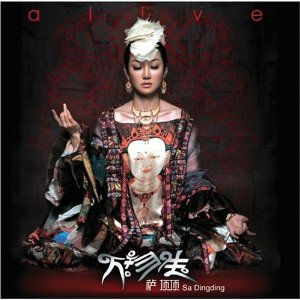
Finally, I wrote this piece whilst listening to the album "Alive" by Sa Dingding on repeat.
My short story, "Sarcoline", originally published through the now defunct Great Jones Street app, has recently been reprinted in Norwich: A Dostoyevsky Wannabe Cities anthology, edited by Sophie Essex, so it seems timely to re-blog a few words about how the story came into being for those who might be interested. Beware, there could be spoilers.
A few words first about the Dostoyevsky Wannabe Cities project. This is a series of short anthologies which are guest edited for the publisher by someone local to the city in question and which feature material from writers and poets in that area. Each book is accompanied by a local event timed to coincide with publication (in this instance, I'll be reading from the book at The Birdcage in Norwich from 7:30pm on Thursday 19th July). Other cities covered and proposed so far include Brooklyn, Bristol, Manchester, Nottingham and Glasgow.
Onto the story itself. "Sarcoline" is one of a series of pieces I've written which will form a new collection regarding Hollywood celebrity deaths of the 1920s through to the 1980s. These stories are told from the viewpoints of the celebrity at the exact moment of their (usually) tragic deaths - the results being kind of alternate autobiographies, fragments of memory, death assimilations, where fact and fiction intertwine as their souls vacate their bodies. In this instance, the story is based on the life and death of the actress, Grace Kelly. The word sarcoline means flesh-coloured, and I felt it resonated with Grace in a way which I could use. I believe the term for this type of work is creative non-fiction.
Here's an excerpt:
In her room at the Barbizon Hotel for Women she lays diagonally across the bed. The tape recorder squeaks on rewind. She simultaneously presses record and play. Speaks: fairytales tell imaginary stories. Me, I'm a living person. I exist. On the bed beside her lies the script for Strindberg's The Father. She reaches for a pencil and taps it against her teeth. Her legs extend upwards, crossed at the ankle. Within a coffee cup, dregs congeal. This scene is lit by the non-Technicolor glow of her bedside lamp, its shade muted yellow as the beam.
Norwich: A Dostoyevsky Wannabe Cities anthology also features fiction and poetry from Anna Cathenka, Doug Jones, Ramona Herdman, N.A. Jackson, Helen Ivory, Julia Webb, Martin Figura, Kat Franceska, and Alison Graham.
Finally, I wrote the entirety of "Sarcoline" whilst listening to the song, "Sweeter Than You", by Dr John Cooper Clarke and Hugh Cornwell from their album "This Time It's Personal" on repeat.
Since Mark E Smith of The Fall died on 24th January 2018 I have listened to nothing other than Fall albums on my daily commute (by bicycle) to work and back. Some of these were records I already owned - particularly the most recent albums - and others I obtained via the library service (including the wonderful 6 CD Peel Sessions retrospective) and elsewhere. Prior to his death I reckon I owned about two sixths of the band's output and I'm probably now closer to three fifths. What strikes me is the diversity from the band who were always different yet always the same. Whilst both Smith and repetition are constants, musically The Fall ran the gamut of post-punk, rockabilly, reggaebilly (my word), and the peripheries of grunge-rock'n'roll, with the often cut-up lyrics reminiscent of Dadaism and experimental fiction. The amalgamation being - to my mind - fiercely intellectual and challenging, confrontational and exciting. As mentioned elsewhere, Mark E Smith is one of the few people I would consider to be a genius, and listening repeatedly to this extensive body of work has confirmed this evaluation.
Now, despite some significant gaps in my collection, this replaying / rehearing / new hearing of Fall songs is coming to a close. It seems important - to me, at any rate - to list what I consider to be my top ten Fall songs. This is the material which most often earwormed my head, which I might quote snatches from at inopportune moments, which got me dancing on that bicycle. The selection might change tomorrow / next week / next year, but this is what I like right now (although not in any order).
Bremen Nacht
As part of the above process, several compilations and alternate versions turned up on the CD's I listened to. By far and away the most frequent of these was "Bremen Nacht", the relentless repetition in the music imitated by the number of times it surprised me as I heard the opening bars of it once again. This is my favourite extended version.
L.A.
I think This Nation's Saving Grace might be my favourite Fall album. There's a cohesive structure which builds over the course of the album and in the middle of this is the glorious "L.A.", basically an instrumental written by Brix Smith, which pins the elegiac to the grotesque, peppered with a handful of lines from Mark which perfectly compliment the music. An oasis.
Kurious Oranj
There's something really friendly about this song which appeals. The music almost jaunty, summery. I love the alternate pronunciations of 'orange'. (Mark's often deliberate mispronunciations always resonate with me). This song was written for the ballet "I Am Kurious Oranj" - of course. This is The Fall.
Mountain Energei
The Real New Fall LP was one of the first records I bought when I rediscovered the band back in 2003 and I have a real affection for this song with it's (on the surface) daft lyrics and ambling music. It's a grow(l)er.
Guest Informant
I consider this a typical Fall song. Repetitive chanting - with much online questioning over the actual lyric (Baghdad/Space Cog/Analyst?) - and a narrative story about hotel paranoia and incompetent staff which whilst surface-trivial is filled with those touches which make me adore Mark's lyrics (in the burning scorch of another Sunday over / the miserable Scottish hotel / resembled a Genesis or Marillion 1973 LP cover).
Rebellious Jukebox
Impossible not to sing along to this one, ay? A sentient jukebox, perhaps, refusing to conform and play standard material - or a metaphor for the band itself? Taxi!
The Man Whose Head Expanded
This may have been the first Fall song I ever heard. I certainly remember it played on the John Peel show and enjoying it, although it was some years later (via TV show The Tube) that I really connected with the band. Love the Casio VL Tone intro which transports me like a time machine back to the early 80s. Actually, thinking about that date, it couldn't have been the first Fall song I ever heard, but let's say it was.
Fol de Rol
The Fall inhabited now, so not to choose something from the final album, New Facts Emerge, would be a travesty. It's a great record in any event, a searing guttural throb of garage rock, and whilst Mark's voice has changed (as though someone has re-tuned his personal instrument), there's a steamroller menace here which benefits from that nuance. This song is a perfect example of what The Fall were all about prior to Mark's death.
Y.F.O.C. / Slippy Floor
Another recent(ish) album which I consider as thematically coherent as This Nations Saving Grace,Your Future, Our Clutter is probably my second favourite Fall record. This piece segues the your future our clutter theme which runs through the album into a raging piece of music which slips and slides all over the place just like that slippy floor itself.
Free Range
I absolutely love the opening of this song. I've always considered The Fall to be a great dance band, and it's impossible not to hypnotically gyrate here. And the riff is sublime. What a great song to finish off this selection. Lyrically not too shabby either.
Of course, I could have included "How I Wrote Elastic Man" (partly responsible for the once-name of my old publishing company), or "Cruisers Creek" (see reference to The Tube - above - where I saw this song performed and fell for the band), or "Hilary" (where's the sixty quid you borrowed off me?), or "Totally Wired" (I'm totally wired). or "Way Round" (I hit roundabout / I just can't find my way / round), or "Secession Man" (you're the one who always runs the show), or "Pumpkin Soup And Mashed Potatoes" (pumpkin soup and mashed potatoes / That has always been my dream). Or - indeed - every Fall song ever written that's always different, always the same.
If you've read this far it's highly likely you're also a big Fall fan, and if you haven't heard of the following site which contains a wealth of lyrical information then I suggest you drop by now: The Annotated Fall.
And finally, to quote again from "Totally Wired", here's some sound advice: You don't have to be strange to be strange / You don't have to be weird to be weird.
My short story, "Shipwrecked In The Heart Of The City", has recently been published in the Midnight Street Press anthology, "Night Light", and as usual I'm blogging about how the story came to be written for those who might be interested. Be aware that this post is likely to contain spoilers.
As usual, I had the title prior to any other ideas. In this case, I stole the phrase from Paul Auster's memoir "The Invention of Solitude". In the chapter titled "The Book of Memory" he states This was life as Crusoe would have lived it: shipwreck in the heart of the city. As soon as I read it I knew it was mine.
Shortly thereafter I had an idea to write a story about a woman whose baby had died in the womb but who refused to acknowledge it, and in the process of thinking through that idea I decided to alternate her story with that of the aborted foetus itself which exists in a kind of pre-birth limbo within a world not entirely dissimilar from David Lynch's Eraserhead vision. The phrase, shipwrecked in the heart of the city, seemed to perfectly convey this.
The story is prefaced with the following quote, which together with the title - I believe - elevates reader expectation and primes them for the fiction:
Interviewer: suppose your house were on fire and you could remove only one thing. What would you take?
Jean Cocteau: I would take the fire
Here's a bit from the middle of it:
There was nothing for it. He took off his clothes, pulled the sheets from the bed until all that remained was the bare wooden frame. He curled up, foetus-like, his head bent in supplication, his knees close to his chest, his arms tight, little fists tensed as if expecting to box. After a moment he felt for his umbilical cord where it was squashed between one leg and his stomach, and he straightened it, pointed it away from his body, as though it were an arrow to another place.
Night Light includes stories by Stephen Laws, Ralph Robert Moore, Tony Richards, Rhys Hughes, Simon Clark, Susan York, Maria V A Johnson, Robert D Richards, Alexander Zelenyj, Gary Couzens, Ian Steadman, Michael Washburn, Terry Grimwood, Allen Ashley, Yvonne Chamberlain, David Turnbull, Andrew Darlington, Stephen Faulkner and Mat Joiner. Buy it here (UK) or here (elsewhere).
Finally, I wrote "Shipwrecked In The Heart Of The City" whilst listening to the album "Barragan" by Blonde Redhead on repeat.
...I've recently written guest posts for the blogs of those fine writers James Everington and Stephen Palmer. For those who might be reading here but not there, below are links to those posts.
Music For Writers
James is running a series of guest blogs from writers who listen to music as part of the creative process. Here's my piece in which I name check Bjork, Blonde Redhead, Echobelly, The Flaming Lips, Nick Cave and Nancy Sinatra, and explain how their work creates an ambience to facilitate mine.
Stephen's guest blog series invites writers to enthuse about one fiction and one non-fiction book. My post is here in which I mention Luis Bunuel's "My Last Breath" and "Jitterbug Perfume" by Tom Robbins. Currently I believe my inaugural post remains the first in the series, but keep an eye on Stephen's blog for other such posts and also his regular musings.