We've all wondered what we might do if we had three wishes. For those amongst us who are sensible, the first wish must be to have an unlimited supply of wishes. Or maybe that should be the third wish, in order to gain an unlimited supply plus those first two wishes. Immortality would also be useful, although it's essential to be careful and specific as to how you wish for it - it would probably be best to throw in a preferred age and status of health with some 'not getting older' stuff into the mix. And we've all read books or seen movies where those granted wishes inadvertently use the term "I wish..." without actually thinking they're making a wish. The whole business is a bit fraught, which is why author Emma Newman's idea of making wishes come true seems down to earth and quite possibly achievable.
You'll have to read the exact guidelines on her Split Worlds website to see why the wishes I've chosen don't include immortality, great wealth, or a everlasting parade of long-snouted animals, but for the moment here are my three wishes:
1. my partner's put a lot of work into editing Fur-Lined Ghettos magazine. We'd like to sell more copies!
2. my novella, "And God Created Zombies", published in 2009 by NewCon Press was at one point being considered for adaptation as a graphic novel. That fell through. I'm hoping there might be someone out there to take it up again
3. I once sent a copy of my comic novella, "Ponthe Oldenguine", to Noel Fielding from The Mighty Boosh suggesting he make it into a movie. It would be nice to receive a reply
So, there we have it. Make my wishes come true!
And here's the housekeeping bit:
"These three wishes are part of a wish-making community organised by author Emma Newman to celebrate the release of the second Split Worlds novel "Any Other Name". Can you make any of them come true? Come and see what other people are wishing for and find out how to join in at www.splitworlds.com/split-worlds-extra/three-wishes – who knows, perhaps someone could make one of your wishes come true."
Check out Emma's novels as well, if you are intrigued by the idea of Downton Abbey crossed with the Fae.
Thursday, 9 May 2013

Wednesday, 1 May 2013
Proboscis Monkey
It's been a while since I made a post about my favourite kind of animal - those with particularly elongated snouts - so what better way to celebrate the 1st May than by showcasing an animal whose very name is derived from a word for snout?
Of course, it has to be the proboscis monkey:

I remember my first encounter with the probsocis monkey as a stuffed animal in the natural history collection at Norwich Castle Museum. This exhibit might even have initiated my love for long-snouted animals - who could fail to be enchanted by such a being.
From wiki: "The proboscis monkey (Nasalis larvatus) or long-nosed monkey, known as the bekantan in Malay, is a reddish-brown arboreal Old World monkey that is endemic to the south-east Asian island of Borneo. The monkey also goes by the Malay name monyet belanda ("Dutch monkey"), or even orang belanda ("Dutchman"), as Indonesians remarked that the Dutch colonisers often had similarly large bellies and noses."

I love that wiki also goes on to explain: "This species of monkey is easily identifiable because of its unusually large nose." Although I do prefer the word snout.
Ladies and Gentlemen, I give you the proboscis monkey:

Of course, it has to be the proboscis monkey:
I remember my first encounter with the probsocis monkey as a stuffed animal in the natural history collection at Norwich Castle Museum. This exhibit might even have initiated my love for long-snouted animals - who could fail to be enchanted by such a being.
From wiki: "The proboscis monkey (Nasalis larvatus) or long-nosed monkey, known as the bekantan in Malay, is a reddish-brown arboreal Old World monkey that is endemic to the south-east Asian island of Borneo. The monkey also goes by the Malay name monyet belanda ("Dutch monkey"), or even orang belanda ("Dutchman"), as Indonesians remarked that the Dutch colonisers often had similarly large bellies and noses."

Ladies and Gentlemen, I give you the proboscis monkey:

Just gasp at the size of that snout!
Monday, 22 April 2013
Irrealism Is Deafening
Labels can be useful tools. Certain consumers like them because they need to be told what it is they should be buying, just in case they end up with something different. Certain consumers have a fear of buying something different, particularly if that something might be other than mainstream. Other consumers are more eclectic, but even those who like art that might be considered 'underground' still have very definite parameters for what it is they should be buying. Our consumer culture is restricted by compartmentalisation, and if - like me - you tend to work in the underground that's beneath the underground, then actually selling product to the right people can be quite difficult. Particularly when they don't know what they're looking for.

As a writer, most of my short stories fall into 'slipstream'. I didn't set out to write slipstream. I simply wrote, and it turned out later that around the same time I started to write there were quite a few writers writing similar stories which they were classing as slipstream. This is an important point. I didn't set out to write slipstream or become defined by it - it just happened to be similar to what I was already writing. And because it's such a catch-all definition, I'm happy to call myself a slipstream writer for those readers who are underground the underground and who might just pick up a book of mine because of it.
This brings us onto Irrealism. When my partner, Sophie, wanted to start a magazine she knew what kind of material she didn't want, but it was harder to define what she did want. Some writers need to be told what to write in order that they can submit something to a magazine, and not having a definite guideline makes it hard for them. I'm sure she would prefer writers who didn't try and write for the magazine, but those who might write something and then find the magazine and realise that it was perfect for them, but in any event she attempted to define some guidelines and found a certain percent of writers understood them and others didn't (and several who wouldn't have done, however specific they might have been, because they don't really read them).
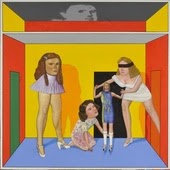
She's good with words, in my opinion. With a view to promoting Fur-Lined Ghettos at an event in Norwich recently she came up with the phrase: "irreality is deafening".
Now, as it turns out, whilst she had no idea what irrealism might be - or even that it actually existed because she had plucked the word from the air - there was suddenly a 'slipstream' moment when she googled the term and realised it was exactly the kind of thing she was looking to publish in the magazine.

From wiki: 'an estrangement from our generally accepted sense of reality' and also forms of writing which can only 'offer particular versions of reality rather than actual descriptions of it'. My understanding of this tends to be a little nebulous. But in art, for example, I would suggest that a painting of a house isn't actually a house. Just as a description of a house isn't a house. This difference, to me, represents irreality. This dichotomy between what is and what isn't tends to be what she is looking to put in the magazine. Wiki suggests this includes writers such as Kafka, Borges and Donald Barthelme, and painters such as Rene Magritte. Again, these authors might well have written material which she would have taken for Fur-Lined Ghettos. Assuming they read our submission guidelines.
But not exclusively of course. Because whilst Fur-Lined Ghettos might now embrace irrealism, it doesn't seek to be defined by it.

For the moment, however, irrealism is our new catchword. Buy a copy of Fur-Lined Ghettos or submit a piece of writing to us, now that you - as a consumer - know what it is she is publishing.
Incidentally, I have peppered this blog post with images found by putting 'irrealism' in a google image search. No admissions are made as to their validity.

As a writer, most of my short stories fall into 'slipstream'. I didn't set out to write slipstream. I simply wrote, and it turned out later that around the same time I started to write there were quite a few writers writing similar stories which they were classing as slipstream. This is an important point. I didn't set out to write slipstream or become defined by it - it just happened to be similar to what I was already writing. And because it's such a catch-all definition, I'm happy to call myself a slipstream writer for those readers who are underground the underground and who might just pick up a book of mine because of it.
This brings us onto Irrealism. When my partner, Sophie, wanted to start a magazine she knew what kind of material she didn't want, but it was harder to define what she did want. Some writers need to be told what to write in order that they can submit something to a magazine, and not having a definite guideline makes it hard for them. I'm sure she would prefer writers who didn't try and write for the magazine, but those who might write something and then find the magazine and realise that it was perfect for them, but in any event she attempted to define some guidelines and found a certain percent of writers understood them and others didn't (and several who wouldn't have done, however specific they might have been, because they don't really read them).
She's good with words, in my opinion. With a view to promoting Fur-Lined Ghettos at an event in Norwich recently she came up with the phrase: "irreality is deafening".
Now, as it turns out, whilst she had no idea what irrealism might be - or even that it actually existed because she had plucked the word from the air - there was suddenly a 'slipstream' moment when she googled the term and realised it was exactly the kind of thing she was looking to publish in the magazine.

From wiki: 'an estrangement from our generally accepted sense of reality' and also forms of writing which can only 'offer particular versions of reality rather than actual descriptions of it'. My understanding of this tends to be a little nebulous. But in art, for example, I would suggest that a painting of a house isn't actually a house. Just as a description of a house isn't a house. This difference, to me, represents irreality. This dichotomy between what is and what isn't tends to be what she is looking to put in the magazine. Wiki suggests this includes writers such as Kafka, Borges and Donald Barthelme, and painters such as Rene Magritte. Again, these authors might well have written material which she would have taken for Fur-Lined Ghettos. Assuming they read our submission guidelines.
But not exclusively of course. Because whilst Fur-Lined Ghettos might now embrace irrealism, it doesn't seek to be defined by it.

For the moment, however, irrealism is our new catchword. Buy a copy of Fur-Lined Ghettos or submit a piece of writing to us, now that you - as a consumer - know what it is she is publishing.
Incidentally, I have peppered this blog post with images found by putting 'irrealism' in a google image search. No admissions are made as to their validity.

Wednesday, 27 March 2013
Rain From A Clear Blue Sky
I've got into the habit of blogging about how various short stories have been written following their publication. Continuing this theme, here is the background to my story, "Rain From A Clear Blue Sky", which was published this month in Black Static #33. Please note there are spoilers in this blog which might affect your enjoyment of the story if you haven't already read it. (Incidentally, following on from an earlier blog post about writing to music, I wrote "Rain From A Clear Blue Sky" whilst listening to "Takk" by Sigur Rós).
Sometimes having a day job can be beneficial. One of my co-workers, Neil, pointed out an article he had seen on the Dyatlov Pass incident. Immediately I was intrigued by this true story where the deaths of nine skiers in Russia had been officially investigated and attributed to a compelling unknown force. To summarise from Wikipedia - and without giving too much of my story away - "Investigators at the time determined that the hikers tore open their tent from within, departing barefoot into heavy snow and a temperature of −30 °C. Although the corpses showed no signs of struggle, two victims had fractured skulls, two had broken ribs, and one was missing her tongue."

Naturally this mystery appealed to me, but I was loathe to write about it directly. For starters, real people had lost their lives. I didn't want to fictionalise them purely for entertainment - and as I wanted this to be a horror story (albeit, a slight one) any 'explanation' of what might have happened would inevitably be horrific. Whilst it would be unlikely any relatives would read the story, I wanted to avoid such directness with those involved. The idea then came to me that I would write the story from the point of view of a new group of travellers also journeying in the region, with the idea that knowledge of what had happened before would prey on their minds and would be implicit in their own reactions to the circumstances they found themselves in.
I usually need several ideas to mesh together before getting a full plot for a story. One of these is the title. I already had "Rain From A Clear Blue Sky". The title came to me quite naturally, during a rain shower from a blue sky. Sometimes the natural world can throw up surprises, but also metaphors. Something unusual which might be naturally explained appealed to me within this story.
Finally, upon thinking of wilderness scenarios, I remembered stories of the third man. I was aware there have been instances where lost explorers have felt there was an addition to their party during times of trouble, and who they felt might have guided them out of difficult situations. The third man is usually described as helpful, but it crossed my mind what would happen if they were malignant. Or maybe if the third man had an identity crisis. It didn't take long for me to realise my party of explorers would have a third man with them. And also that the third man should be the narrator of the story.
So, there we have it: the Dyatlov Pass incident, the title, the third man. All these elements came together in this story. If you've read it, please comment below. If you haven't, then please consider buying the magazine which also contains fine stories by James Cooper, Carole Johnstone, Michael Kelly, Tim Casson and Gary McMahon, with DVD and book reviews and comment columns. Black Static is the UK's finest magazine and further information about this issue is here.

Sometimes having a day job can be beneficial. One of my co-workers, Neil, pointed out an article he had seen on the Dyatlov Pass incident. Immediately I was intrigued by this true story where the deaths of nine skiers in Russia had been officially investigated and attributed to a compelling unknown force. To summarise from Wikipedia - and without giving too much of my story away - "Investigators at the time determined that the hikers tore open their tent from within, departing barefoot into heavy snow and a temperature of −30 °C. Although the corpses showed no signs of struggle, two victims had fractured skulls, two had broken ribs, and one was missing her tongue."

Artwork by David Gentry
Naturally this mystery appealed to me, but I was loathe to write about it directly. For starters, real people had lost their lives. I didn't want to fictionalise them purely for entertainment - and as I wanted this to be a horror story (albeit, a slight one) any 'explanation' of what might have happened would inevitably be horrific. Whilst it would be unlikely any relatives would read the story, I wanted to avoid such directness with those involved. The idea then came to me that I would write the story from the point of view of a new group of travellers also journeying in the region, with the idea that knowledge of what had happened before would prey on their minds and would be implicit in their own reactions to the circumstances they found themselves in.
I usually need several ideas to mesh together before getting a full plot for a story. One of these is the title. I already had "Rain From A Clear Blue Sky". The title came to me quite naturally, during a rain shower from a blue sky. Sometimes the natural world can throw up surprises, but also metaphors. Something unusual which might be naturally explained appealed to me within this story.
Finally, upon thinking of wilderness scenarios, I remembered stories of the third man. I was aware there have been instances where lost explorers have felt there was an addition to their party during times of trouble, and who they felt might have guided them out of difficult situations. The third man is usually described as helpful, but it crossed my mind what would happen if they were malignant. Or maybe if the third man had an identity crisis. It didn't take long for me to realise my party of explorers would have a third man with them. And also that the third man should be the narrator of the story.
So, there we have it: the Dyatlov Pass incident, the title, the third man. All these elements came together in this story. If you've read it, please comment below. If you haven't, then please consider buying the magazine which also contains fine stories by James Cooper, Carole Johnstone, Michael Kelly, Tim Casson and Gary McMahon, with DVD and book reviews and comment columns. Black Static is the UK's finest magazine and further information about this issue is here.

Thursday, 14 March 2013
From Book to Film
I recently read "Rosemary's Baby" by Ira Levin and thoroughly enjoyed it. Having already seen the movie adaptation directed by Roman Polanski several times I was struck by how exactly Polanksi had followed the book. In fact, it felt more that I was remembering the book rather than reading it. The adherence to the story, dialogue, indeed every element, was incredible. A perfect adaptation, some might feel. Indeed, Polanski was such a stickler for detail that Ira Levin later claimed he had been telephoned by the director to ask which issue of the New Yorker a character had been reading which featured an advert for a shirt as Polanksi wanted to ensure he could use the same edition in the film!

It got me to thinking about other books I had read which have been adapted into movies. Which of those I thought were successful, and which less so. And why this might be the case. So, here's a few examples that came to mind.
I love the Japanese writer Haruki Murakami, whose blending of fantasy and reality strikes me as very slipstream (the core of my own fiction). "Norwegian Wood" is one of my favourite books that I've read, and I feel the movie adaptation directed by Tran Anh Hung captures the mood of the novel exceptionally well. It's not a scene by scene 're-make' as was "Rosemary's Baby", but the essence of the novel is translated finely to the screen. Both book and film are highly recommended.

Less successful is the adaptation of "The Time Traveller's Wife" by Audrey Niffenegger. The book is sublime. I picked it up without any expectation of thinking I would enjoy it, and was swept away. The ending is perfect - a logical summation of everything the book was leading up to and manages to be honest, terrifying, and beautiful simultaneously. The movie, however, compacts the story into confusion; and totally trashes the ending of the novel to the extent that I couldn't help but loudly declaim it as I left the cinema. I realise a movie doesn't have to religiously follow a novel's plot for it to be successful or for it to work on it's own terms, but a blatant disregard for the source material smacks of commercialism over artistry. If you've read the book, avoid the movie at all costs. If you've seen the movie, please read the book.

Unlike the above movie, where the thickness of the book might have required a restricted storyline for the length of the movie, "Where The Wild Things Are" takes its source material from the thin children's picture book by Maurice Sendak. The movie, however, whilst inevitably adding to the story, doesn't detract from the overall feeling of the book - it expands on it in such a way which doesn't trash the source material and also manages to avoid seemingly unnecessary material that might be the norm for such a 'padding'. Instead, we have a delightful, fantastical, at times sinister adaptation of a delightful, fantastical, and sinister story. Each succeed in their own right.

Adapting short children's books to film is fraught with pitfalls. I can barely type due to anger at the train wrecks of Dr Seuss adaptations: especially "The Grinch" (with it's totally unnecessary back story depicting the 'reason' for the Grinch's behaviour), and the even more intolerable "Cat In The Hat". Roald Dahl's "Charlie and the Chocolate Factory" has also had a couple of mixed attempts to translate to the big screen. The 1971 version featuring Gene Wilder as Willy Wonka is by far my favourite, even though the squirrels were replaced by geese (presumably geese being easier to direct in the years before CGI), and whilst the Johnny Depp Wonka is in some ways more faithful to the book, again, an unnecessary 'explanation' for his eccentricity serves only to annoy rather than compliment the novel.

Definitely not a children's book, I'm going to conclude with "American Psycho" by Bret Easton Ellis. Whereas the film adaptation stuns with explicitness and bravery (and to my surprise, and perhaps shame, I found it unusual to be directed by a woman - not given the subject material, but the treatment. Although noting that Mary Harron was the first journalist to interview the Sex Pistols in the US I realise I shouldn't make these misogynistic statements!), the novel is much more detailed and graphic than would have been acceptable on celluloid. I guess another blog post might be worthwhile to consider the difference between the visual and the written word in terms of explicitly violent or sexual material, whether it's best for images to be contained within the head of the reader or emblazoned on the silver screen, but in relation to this specific post I feel the adaptation of "American Psycho" doesn't detract from the material left within the book, but stands as a great movie in its own right.

It got me to thinking about other books I had read which have been adapted into movies. Which of those I thought were successful, and which less so. And why this might be the case. So, here's a few examples that came to mind.
I love the Japanese writer Haruki Murakami, whose blending of fantasy and reality strikes me as very slipstream (the core of my own fiction). "Norwegian Wood" is one of my favourite books that I've read, and I feel the movie adaptation directed by Tran Anh Hung captures the mood of the novel exceptionally well. It's not a scene by scene 're-make' as was "Rosemary's Baby", but the essence of the novel is translated finely to the screen. Both book and film are highly recommended.
Less successful is the adaptation of "The Time Traveller's Wife" by Audrey Niffenegger. The book is sublime. I picked it up without any expectation of thinking I would enjoy it, and was swept away. The ending is perfect - a logical summation of everything the book was leading up to and manages to be honest, terrifying, and beautiful simultaneously. The movie, however, compacts the story into confusion; and totally trashes the ending of the novel to the extent that I couldn't help but loudly declaim it as I left the cinema. I realise a movie doesn't have to religiously follow a novel's plot for it to be successful or for it to work on it's own terms, but a blatant disregard for the source material smacks of commercialism over artistry. If you've read the book, avoid the movie at all costs. If you've seen the movie, please read the book.

Unlike the above movie, where the thickness of the book might have required a restricted storyline for the length of the movie, "Where The Wild Things Are" takes its source material from the thin children's picture book by Maurice Sendak. The movie, however, whilst inevitably adding to the story, doesn't detract from the overall feeling of the book - it expands on it in such a way which doesn't trash the source material and also manages to avoid seemingly unnecessary material that might be the norm for such a 'padding'. Instead, we have a delightful, fantastical, at times sinister adaptation of a delightful, fantastical, and sinister story. Each succeed in their own right.
Adapting short children's books to film is fraught with pitfalls. I can barely type due to anger at the train wrecks of Dr Seuss adaptations: especially "The Grinch" (with it's totally unnecessary back story depicting the 'reason' for the Grinch's behaviour), and the even more intolerable "Cat In The Hat". Roald Dahl's "Charlie and the Chocolate Factory" has also had a couple of mixed attempts to translate to the big screen. The 1971 version featuring Gene Wilder as Willy Wonka is by far my favourite, even though the squirrels were replaced by geese (presumably geese being easier to direct in the years before CGI), and whilst the Johnny Depp Wonka is in some ways more faithful to the book, again, an unnecessary 'explanation' for his eccentricity serves only to annoy rather than compliment the novel.

Definitely not a children's book, I'm going to conclude with "American Psycho" by Bret Easton Ellis. Whereas the film adaptation stuns with explicitness and bravery (and to my surprise, and perhaps shame, I found it unusual to be directed by a woman - not given the subject material, but the treatment. Although noting that Mary Harron was the first journalist to interview the Sex Pistols in the US I realise I shouldn't make these misogynistic statements!), the novel is much more detailed and graphic than would have been acceptable on celluloid. I guess another blog post might be worthwhile to consider the difference between the visual and the written word in terms of explicitly violent or sexual material, whether it's best for images to be contained within the head of the reader or emblazoned on the silver screen, but in relation to this specific post I feel the adaptation of "American Psycho" doesn't detract from the material left within the book, but stands as a great movie in its own right.
Thursday, 28 February 2013
Writing To Music
I've got into the habit of listening to albums on a loop continuously when writing short stories. It has to be something unobtrusive; a background noise to anchor me in the moment of writing, to enclose me like a bubble until the story is written and the spell can be broken. Different stories suit different moods and some albums I use repeatedly because I know I can write easily to them. I can usually knock out a 2,500 to 5,000 word story in one session, and during that time the CD can play three or four times. Sometimes I play it in order, sometimes on shuffle. Generally, the music weaves in and out of my head and creates an ambience for the story, whilst also cutting out distractions that I might hear beyond the blast of the music.
So, I thought I'd list some of the stories I've written and their 'soundtracks'. Whether you write or not please give these artists a listen. Needless to say, I only play music that I love.
"Burning Daylight" - this recent short story combines the life of a mayfly with a human life. Blonde Redhead are a band I frequently listen to when writing, and for this story I chose their album "Penny Sparkle". The music perfectly complemented my mood, and as I know the album well the songs segued into each other almost without me noticing. I also recommend their albums "Misery Is A Butterfly" and "23" as good writing-to-music records.

"Dirty Snow" - I wrote this story whilst listening to Kraftwerk's "Trans-Europe Express", an album I hadn't listened to before. In fact, the CD I bought secondhand was scratched but having seen the band in the news recently I wondered if I could rip it on my PC without the 'jumping' around occuring. To my surprise - although it took a while - it was successful. The monotone nature of the music perfectly suited this crime story.

"The Strangeness In Me" - On this occasion it wasn't a whole album I listened to on repeat, but one single song: "The Strangeness In Me" as performed by The Cramps. Their version is slow and melodious, and as I was using the song lyrics as part of the story (credited in my collection, "Nitrospective", where the story appeared) it made sense to keep the disc spinning for the whole three hours.

"The Universe At Gun Point" - This story was written for the Classical Book of Horror Stories anthology and I've mentioned in a previous blog the gestation of the piece choosing the music of Erik Satie as its starting point. Because of this, I found some samples of his music online and listened to these as I wrote.
Other albums I play repeatedly when writing short stories include Polly Scattergood's self-titled CD, The Flaming Lips "Yoshimi Battles The Pink Robots", Radiohead's "Kid A", and the music of Coeur de Pirate and Carla Bruni.

As would be clear from listening to any of these albums, the lyrics have to be almost buried in the music and the music itself cannot be too raucous which excludes most of my punk collection, although I have written to tracks by the Ramones. If you also listen to music when writing, please comment on the blog and include your choices there.
So, I thought I'd list some of the stories I've written and their 'soundtracks'. Whether you write or not please give these artists a listen. Needless to say, I only play music that I love.
"Burning Daylight" - this recent short story combines the life of a mayfly with a human life. Blonde Redhead are a band I frequently listen to when writing, and for this story I chose their album "Penny Sparkle". The music perfectly complemented my mood, and as I know the album well the songs segued into each other almost without me noticing. I also recommend their albums "Misery Is A Butterfly" and "23" as good writing-to-music records.
"Dirty Snow" - I wrote this story whilst listening to Kraftwerk's "Trans-Europe Express", an album I hadn't listened to before. In fact, the CD I bought secondhand was scratched but having seen the band in the news recently I wondered if I could rip it on my PC without the 'jumping' around occuring. To my surprise - although it took a while - it was successful. The monotone nature of the music perfectly suited this crime story.

"The Strangeness In Me" - On this occasion it wasn't a whole album I listened to on repeat, but one single song: "The Strangeness In Me" as performed by The Cramps. Their version is slow and melodious, and as I was using the song lyrics as part of the story (credited in my collection, "Nitrospective", where the story appeared) it made sense to keep the disc spinning for the whole three hours.

"The Universe At Gun Point" - This story was written for the Classical Book of Horror Stories anthology and I've mentioned in a previous blog the gestation of the piece choosing the music of Erik Satie as its starting point. Because of this, I found some samples of his music online and listened to these as I wrote.
Other albums I play repeatedly when writing short stories include Polly Scattergood's self-titled CD, The Flaming Lips "Yoshimi Battles The Pink Robots", Radiohead's "Kid A", and the music of Coeur de Pirate and Carla Bruni.

As would be clear from listening to any of these albums, the lyrics have to be almost buried in the music and the music itself cannot be too raucous which excludes most of my punk collection, although I have written to tracks by the Ramones. If you also listen to music when writing, please comment on the blog and include your choices there.
Thursday, 7 February 2013
The Novels I've Never Sold
I thought I'd make a post here about all the novels I've written and the one which I've sold. With me there's a great disparity between novel writing success and short story writing success. With short stories I've sold over 100 so far and whilst I don't have the exact figure with me I would estimate I've written about 130. As some of those were written recently I think that's a pretty good hit rate. Some of these short stories were written in a matter of hours, so - again - the turnaround from the idea to the finished product can be very fast. With novels, however, I find it a real struggle. I've finished seven so far, with one success. It takes up to six months of writing time, an age to submit and get responses, and then a battering of rejections. Of course, I might simply be a good short story writer and a poor novel writer: there are many reasons for this lack of success. Still, as I'm currently nearing the end of my 8th novel and approaching the point at which I'll need to sell it, I thought a round-up of what I've written so far might be interesting. Of course, in the unlikely event any publishers are reading this, the unpublished novels are currently up for grabs.
Reason
First novel I wrote back in 1988. A train enters a tunnel and a group of travellers find they cannot leave their compartment. The train remains travelling through the tunnel for an extended period of time which creates anxiety and confusion amongst the travellers, who eventually break out and find they are alone on the train. Probably influenced by Bunuel's "Exterminating Angel" this has all the problems of a first novel and I haven't looked at it in years.
Consumption
Second novel written around 1989. A painfully shy and self-obsessed chap moves into rented accommodation and becomes fixated by a fellow tenant who becomes his first girlfriend. When he accidentally kills her, he decides to consume parts of her body in the hope that he might transmute her soul. A cross between Dostoevsky's "Crime and Punishment" and The Stranglers' "La Folie" this novel fails because the main character became so well defined in the first half of the novel as someone who would never do what he does in the second half.
Moon Beaver
The link above makes it clear that this became my first published novel. Please buy it! I wrote the first half in 1992 and then left it for six years and added a paragraph. I then completed the novel in 1998 and it was published in 2003 by the excellent ENC Press. I remain proud of this work which is a comic satire examining themes of individuality and immortality - themes which appear frequently in my work. It's a lot of fun and riffs a little on Tom Robbins' novels which I love.
Full Circle
I had this idea on a National Express bus journey from Norwich to London and had to keep it in my head and buy a notebook from WH Smith to write it down as soon as the bus stopped! Set in the North and South of England, in Peru and in Hungary, this sets up a N/E/S/W compass point of converging storylines which - whilst it contains some interesting ideas - ultimately fails under the weight of the inherent coincidences required for it to hum along. 'Contrived' would be a better title for the book!
Bobbing For Reality
Always liked this title, but this book's chance has been and gone. Written around 2004/5 separate stories connect a serial dater with a one parent father with a self-employed freelance deflowerer of virgins and a serial killer. Set in New York and London with a large portion of the book revolving around Internet chat rooms and the anonymity they contain, I feel that the massive increase in technology since this was written makes the computer-set-pieces dated and no longer usable. A shame, as I had high hopes for this one.
The Immortalists
Finally, since Moon Beaver, a novel I've written which I really think deserves to sell. Taking the irascible PI named Mordent from some short stories I've had published, this is a modern pulp noir crime novel that pitches two rival gangs against each other for the secret of immortality whilst Mordent investigates a missing persons case that is much more than it appears to be on the surface. I had great fun writing this, and I've had some great feedback. This novel is still being pitched to agents and publishers, together with...
Church Of Wire
My second Mordent novel. Mordent investigates a string of cases where a serial killer appears to be targeting the survivors of previous serial killer attacks and whether or not they are linked to a shady religious organisation known as the Church of Wire. As with The Immortalists this story has a healthy dose of pulp sensibility - is drenched in it, in fact - and I have fairly high hopes that both of these will someday be published. Watch this space.
Body And Soul
This the novel I'm working on at the moment. I've reached 75,000 words and am looking for 90,000 minimum. I've tried to be more commercial with this work, which is a far future SF novel set in an age where mankind has regressed technologically and has evolved into beings where for a new birth the females carry the body but the male carries the soul. Both parents have to be present at birth for the pregnancy to be effective, and this world is about to be rent asunder by demons from Earth's past. Again, I'm fairly hopeful with this, but considering the above I guess the question is:
And the answer is:
Reason
First novel I wrote back in 1988. A train enters a tunnel and a group of travellers find they cannot leave their compartment. The train remains travelling through the tunnel for an extended period of time which creates anxiety and confusion amongst the travellers, who eventually break out and find they are alone on the train. Probably influenced by Bunuel's "Exterminating Angel" this has all the problems of a first novel and I haven't looked at it in years.
Consumption
Second novel written around 1989. A painfully shy and self-obsessed chap moves into rented accommodation and becomes fixated by a fellow tenant who becomes his first girlfriend. When he accidentally kills her, he decides to consume parts of her body in the hope that he might transmute her soul. A cross between Dostoevsky's "Crime and Punishment" and The Stranglers' "La Folie" this novel fails because the main character became so well defined in the first half of the novel as someone who would never do what he does in the second half.
Moon Beaver
The link above makes it clear that this became my first published novel. Please buy it! I wrote the first half in 1992 and then left it for six years and added a paragraph. I then completed the novel in 1998 and it was published in 2003 by the excellent ENC Press. I remain proud of this work which is a comic satire examining themes of individuality and immortality - themes which appear frequently in my work. It's a lot of fun and riffs a little on Tom Robbins' novels which I love.
Full Circle
I had this idea on a National Express bus journey from Norwich to London and had to keep it in my head and buy a notebook from WH Smith to write it down as soon as the bus stopped! Set in the North and South of England, in Peru and in Hungary, this sets up a N/E/S/W compass point of converging storylines which - whilst it contains some interesting ideas - ultimately fails under the weight of the inherent coincidences required for it to hum along. 'Contrived' would be a better title for the book!
Bobbing For Reality
Always liked this title, but this book's chance has been and gone. Written around 2004/5 separate stories connect a serial dater with a one parent father with a self-employed freelance deflowerer of virgins and a serial killer. Set in New York and London with a large portion of the book revolving around Internet chat rooms and the anonymity they contain, I feel that the massive increase in technology since this was written makes the computer-set-pieces dated and no longer usable. A shame, as I had high hopes for this one.
The Immortalists
Finally, since Moon Beaver, a novel I've written which I really think deserves to sell. Taking the irascible PI named Mordent from some short stories I've had published, this is a modern pulp noir crime novel that pitches two rival gangs against each other for the secret of immortality whilst Mordent investigates a missing persons case that is much more than it appears to be on the surface. I had great fun writing this, and I've had some great feedback. This novel is still being pitched to agents and publishers, together with...
Church Of Wire
My second Mordent novel. Mordent investigates a string of cases where a serial killer appears to be targeting the survivors of previous serial killer attacks and whether or not they are linked to a shady religious organisation known as the Church of Wire. As with The Immortalists this story has a healthy dose of pulp sensibility - is drenched in it, in fact - and I have fairly high hopes that both of these will someday be published. Watch this space.
Body And Soul
This the novel I'm working on at the moment. I've reached 75,000 words and am looking for 90,000 minimum. I've tried to be more commercial with this work, which is a far future SF novel set in an age where mankind has regressed technologically and has evolved into beings where for a new birth the females carry the body but the male carries the soul. Both parents have to be present at birth for the pregnancy to be effective, and this world is about to be rent asunder by demons from Earth's past. Again, I'm fairly hopeful with this, but considering the above I guess the question is:
Why do I bother with novels?
And the answer is:
because some stories demand to be told that way.
Subscribe to:
Posts (Atom)